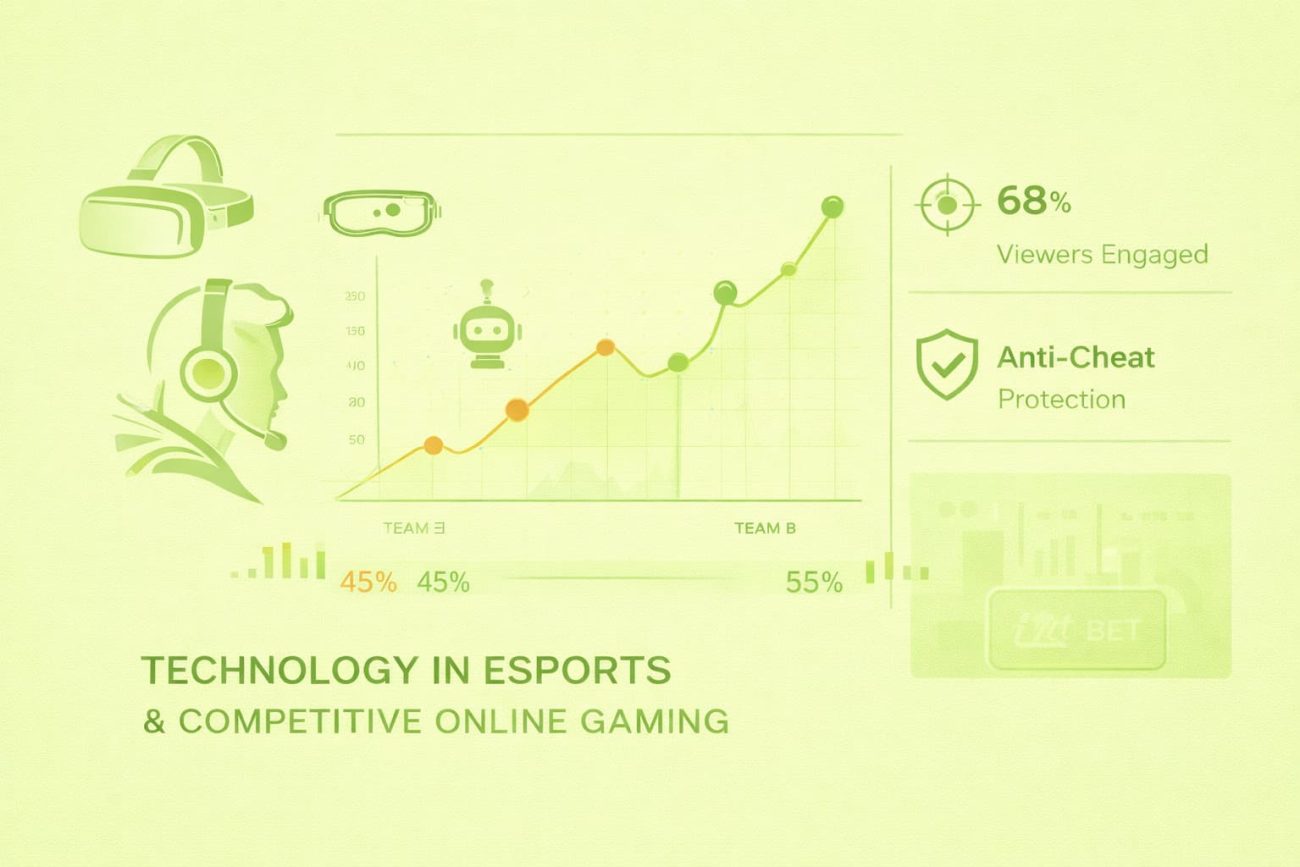
Online gaming has evolved far beyond entertainment, becoming a highly competitive, data-driven ecosystem closely connected to betting and gambling markets. Esports now operates as a billion-dollar industry, driven by constant technological innovation. From real-time analytics to immersive viewing tools, modern technology is reshaping how games are played, watched, and wagered on.
The Technological Foundations of Modern Esports
The global growth of esports would not be possible without major advances in connectivity and infrastructure. High-speed internet, cloud servers, and low-latency networks allow players from different continents to compete in real time with minimal disruption.
These improvements have also standardized competitive environments, reducing unfair advantages caused by hardware or connection differences. For sportsbooks and betting platforms, stable infrastructure ensures accurate data feeds and reliable live markets.
Streaming Innovations and Audience Expansion
Streaming platforms have become the backbone of esports visibility. Unlike traditional sports broadcasting, esports streaming is interactive, data-rich, and community-driven.
Enhanced Spectator Features
Modern streams offer features such as real-time statistics overlays, multi-angle views, and interactive chat integration. These tools increase viewer understanding of gameplay dynamics and support more informed live betting decisions.
Improved streaming quality has also shortened the gap between casual viewers and hardcore fans, expanding the addressable market for esports wagering.
Real-Time Data and Analytics in Competitive Gaming
Data analytics is one of the most influential innovations in esports technology. Every in-game action generates measurable data that can be processed instantly.
This data is used to:
- Track player performance and team momentum
- Identify patterns that influence odds movement
- Support advanced live betting markets
For betting operators, real-time analytics reduces uncertainty and allows for more precise pricing, especially in fast-moving esports environments.
Artificial Intelligence and Match Modeling
AI-driven systems are increasingly used to analyze historical matches and predict in-game developments. While outcomes remain uncertain, these models improve market efficiency and risk management.
AI in Odds Management
AI tools help sportsbooks adjust odds dynamically based on thousands of variables, including player behavior, map control, and economic advantage. This automation allows operators to offer deeper esports markets without increasing operational risk.
Immersive Technologies and the Future Viewer Experience
Immersion is becoming a competitive differentiator in esports. Virtual reality and augmented reality technologies are gradually being integrated into competitive gaming ecosystems.
VR and Interactive Viewing
VR-based spectator modes allow users to experience matches from in-game perspectives, creating a sense of presence that traditional broadcasts cannot replicate. This level of immersion strengthens emotional engagement, which directly correlates with betting activity.
Although still in early stages, immersive technologies are expected to play a larger role as hardware adoption increases.
Competitive Integrity and Anti-Cheat Systems
As esports betting grows, maintaining competitive integrity becomes critical. Advanced anti-cheat technologies and monitoring tools protect both tournaments and betting markets.
Key developments include:
- Kernel-level anti-cheat software
- Behavioral analysis to detect anomalies
- Real-time integrity monitoring during live matches
These systems help prevent match manipulation and ensure trust across esports ecosystems, benefiting players, operators, and bettors alike.
Mobile Optimization and Always-On Engagement
Mobile technology has reshaped how users interact with esports content and betting platforms. Optimized mobile interfaces allow fans to watch streams, analyze data, and place bets simultaneously.
This always-on access increases session duration and encourages micro-betting behavior, especially during live matches. For sportsbooks, mobile-first esports products are no longer optional but essential.
The Strategic Impact on Esports Betting Markets
Technological innovation is not just enhancing gameplay; it is redefining esports betting strategies. Faster data, deeper insights, and immersive viewing experiences create more informed and active bettors.
Rather than relying on simple win-or-lose markets, modern esports betting increasingly focuses on in-game events, player performance, and short-term outcomes. This shift aligns perfectly with the fast pace of competitive gaming.
What Comes Next for Esports Technology
The future of esports lies in tighter integration between gameplay, data, and user experience. As technology continues to evolve, the line between playing, watching, and betting will become increasingly blurred.
For sportsbooks and gaming operators, staying competitive means investing in innovation rather than simply expanding market coverage. Those who adapt to these technological shifts will be best positioned to capture the next phase of esports growth.
