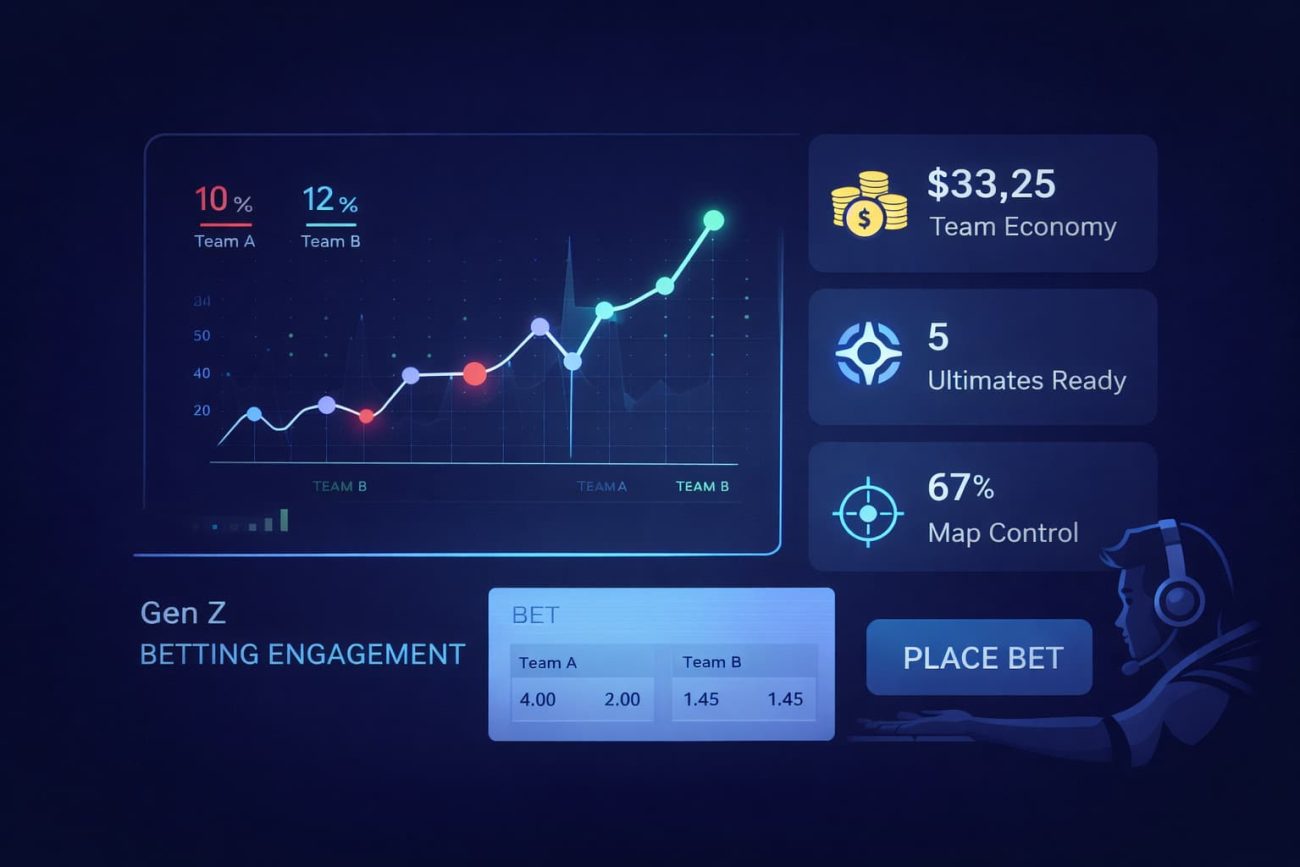
Esports betting has grown rapidly, but engagement levels still lag behind traditional sports wagering. While audiences are younger, more digital, and highly active across platforms, many sportsbooks struggle to convert esports interest into sustained betting activity. The issue is not demand, but experience. Closing this gap requires tools and content that match how esports fans consume information and make decisions.
Why Esports Bettors Behave Differently
Esports audiences, dominated by Gen Z and younger millennials, engage with betting content in fundamentally different ways. They are accustomed to instant access to data, live interaction, and visual-first formats.
Unlike traditional sports bettors, esports punters rarely rely on pre-match previews or static statistics. Instead, they expect real-time insights that mirror the fast pace of gameplay. Without these elements, sportsbooks risk losing attention within seconds.
Key behavioral differences include:
- Preference for live and micro-markets over pre-match bets
- Heavy reliance on contextual, in-game information
- Short attention spans shaped by streaming and social platforms
Understanding these habits is the foundation for improving engagement.
The Engagement Gap Facing Sportsbooks
The engagement gap emerges when sportsbooks apply traditional betting frameworks to esports markets. Odds may be competitive, but the surrounding content often feels shallow or outdated.
Many platforms still present esports betting as a simplified add-on rather than a core product. This results in low bet frequency, weak session duration, and limited player retention.
The challenge is not about offering more markets, but about making those markets understandable and actionable in real time.
Data Transparency as a Core Engagement Driver
Esports bettors want to know why odds move, not just what they are. Transparency builds confidence and encourages users to explore more complex markets.
From Raw Data to Usable Insights
Advanced data alone does not solve the problem. What matters is how that data is translated into insights that are easy to consume mid-match.
Innovative solutions like BetPeek from Oddin.gg focus on surfacing key performance indicators, momentum shifts, and situational advantages directly within the betting interface. This reduces friction between watching and betting.
Real-Time Context Is Non-Negotiable
In esports, matches can swing within seconds. Static odds pages fail to capture the narrative of a game in progress, which is critical for engagement.
Enhancing Live Betting Decisions
Real-time tools that explain why a team’s odds are changing help bettors feel informed rather than reactive. This aligns closely with how esports fans already analyze matches while watching streams.
Insights such as player economy, ultimate ability availability, or map control can dramatically increase betting confidence when presented clearly and at the right moment.
Meeting Gen Z Expectations
Gen Z users have high standards shaped by gaming interfaces, streaming platforms, and interactive media. Betting products that feel slow, text-heavy, or opaque are quickly abandoned.
To resonate with this audience, sportsbooks must prioritize:
- Visual clarity over dense statistics
- Short, meaningful data points instead of long explanations
- Seamless integration with live viewing experiences
These expectations explain why esports-specific innovation is essential rather than optional.
The Strategic Value for Sportsbooks
Improving engagement is not just about user experience; it directly impacts revenue. More engaged bettors place more bets, explore deeper markets, and return more frequently.
From an operator perspective, esports innovation delivers:
- Higher live betting turnover
- Increased market liquidity
- Stronger differentiation in a competitive market
As highlighted in discussions led by iGB and industry figures like Marek Suchar, engagement-focused tools are becoming a strategic priority rather than an experimental feature.
Why Innovation Outweighs Odds Optimization
Odds efficiency in esports is already strong across major providers. Marginal improvements in pricing do little to change user behavior if the betting experience remains passive.
The real opportunity lies in transforming betting into an extension of esports fandom. When users feel they understand the game better through the sportsbook interface, betting becomes part of the viewing ritual rather than a separate action.
The Future of Esports Engagement
Closing the esports engagement gap requires sportsbooks to rethink how they present information, not just how they price markets. Tools that deliver clarity, context, and confidence in real time will define the next phase of esports betting growth.
As esports continues to mature, engagement-driven innovation will separate platforms that merely offer esports markets from those that truly understand esports audiences.
